A quick note on how we write: we’re a family planning a move from Paris to Portugal’s Silver Coast over a five-year horizon. We’re not a relocation agency and we don’t earn a commission on where you land. Everything below is either our own research or our own experience — and we tell you which is which.
Why Caldas da Rainha keeps coming up for families
When people picture moving to Portugal with kids, they usually think Lisbon, Cascais, or the Algarve. Then they see the prices, the tourist crowds, and the summer traffic — and they start looking north, to the Silver Coast.
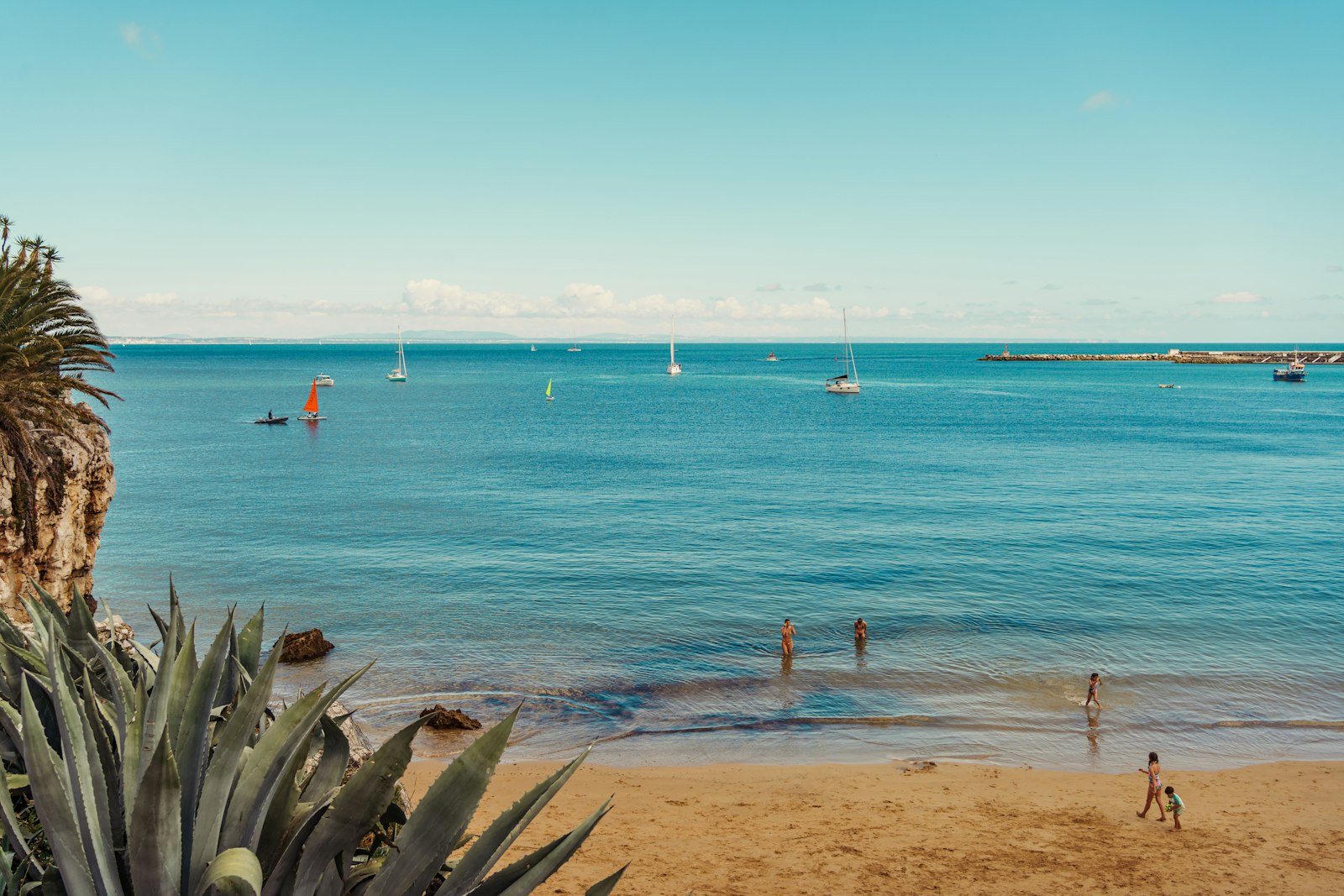
Caldas da Rainha sits right in the middle of that region: a real, working city of around 52,000 people, roughly an hour north of Lisbon, and about 15 minutes inland from the beaches at Foz do Arelho and São Martinho do Porto. It’s a UNESCO Creative City known for its ceramics, it has a genuinely beautiful central park (Parque Dom Carlos I), a daily fruit-and-vegetable market that’s been running since the 1400s, and — crucially for families — it doesn’t empty out in October when the tourists leave.
That last point is the one most guides skip. A lot of “best places to live in Portugal” lists are really “best places to holiday.” Caldas is different: it’s a place where people actually live year-round, which means schools, doctors, sports clubs, and other families are there in January, not just August.
What we love about it (on paper, and so far in person)
- It’s a full-service city, not a resort — supermarkets, a hospital, schools, and shops are all walkable or a short drive.
- Year-round community. Larger Silver Coast towns like Caldas da Rainha have more established expat and local family networks than the tiny coastal villages.
- Beaches without beach-town prices. You’re 15 minutes from the coast but paying inland rents.
- Central location. Óbidos (15 min), Nazaré (30 min), Lisbon airport (about an hour). Easy for visitors and day trips.
What ties all of that together, honestly, is the pace. Caldas da Rainha is a real working Portuguese town, not a resort that empties out in October, so the rhythm of the week feels normal rather than performed. There is a Saturday market you actually shop at, a hospital and schools that serve locals, and a café culture where the same faces turn up. For a family, that ordinariness is the point: we are not looking for a permanent holiday, we are looking for somewhere the kids can grow up with roots, bilingual friends, and the Atlantic fifteen minutes away when we want it.
The honest cons for families
- It’s not a postcard. Parts of Caldas are workaday and a little worn — this is a living city, not a manicured one. Some people love that; some are surprised by it.
- Winters are grey and damp. Portuguese houses are often poorly insulated. Budget for heating and check any rental for damp before you sign.
- English is less common than in Lisbon or the Algarve. Great for integration, harder for day one.
- Rents have risen. It’s still cheaper than the coast, but the bargains of five years ago are gone.
Schools: the question that decides everything for families
For most families, the school decision comes before the town decision. Caldas da Rainha gives you three realistic paths:
- Portuguese public school — free, fully immersive, and how your kids will actually become Portuguese-speaking and locally rooted. Younger children (under ~8) tend to adapt fastest. It’s the choice we’re leaning toward.
- Private Portuguese schools — a middle path, smaller classes, still in Portuguese, moderate fees.
- International schools — the nearest full international options are generally toward the Lisbon/Cascais corridor rather than in Caldas itself, so factor in either a commute or a wider search if an English-language curriculum is non-negotiable.
The part nobody warns you about is the gap between the school system on paper and the school run in practice. In Caldas da Rainha the public schools are solid and genuinely free, but the good ones fill up, catchment areas matter, and enrolment paperwork for foreign families takes patience and a helpful school secretary. International schools are thin on the ground locally — most sit in the Lisbon corridor — so if that is a hard requirement for you, it quietly reshapes where in the area you can realistically live.
Our plan is Portuguese public school from the start, backed by private tutoring in the first year so the girls can catch up to grade-level Portuguese without falling behind in maths and science while they do it. Every family we have spoken to says the same thing: the younger the child, the shorter the painful phase, and by the end of year one the language stops being the story.
One honest caution: don’t decide your child’s schooling from a blog (including ours). Visit the specific schools, ask about places in your child’s year, and talk to parents already there. Availability changes year to year.

What it costs: a family reality check
| Item | Rough monthly range (family of 4) |
|---|---|
| Rent (2–3 bed apartment/house) | €900 – €1,500 |
| Utilities (electricity, water, gas) | €120 – €200 |
| Internet + mobile | €40 – €60 |
| Groceries | €500 – €700 |
| Public school | Free (books/materials extra) |
| Health (SNS + occasional private) | €50 – €150 |
These are planning figures, not a promise — your rent especially depends on timing, location, and luck. For the full breakdown, see our cost of living on Portugal’s Silver Coast guide.
If you’re thinking of buying rather than renting, modern 2-bedroom apartments in Caldas da Rainha have recently been in the €120,000–€200,000 range, with houses higher — but treat any figure as a starting point and verify locally.
One practical money tip for the move itself: we plan to handle euro rent, deposits, and everyday spending in Caldas da Rainha with a Wise multi-currency account, so we’re not losing money to poor bank exchange rates. (Worth sorting early too: your NIF and a Portuguese bank account.)
Healthcare with kids
As EU citizens registered as residents, your family can use Portugal’s public health service (SNS). Caldas da Rainha has a public hospital (Hospital de Caldas da Rainha) plus health centres and private clinics for when you want to skip the wait. Many families run a hybrid: SNS as the backbone, occasional private appointments (often €40–€70) for speed.
The SNS generally works well for routine care, but wait times for specialists can be 2–6 months. For expat families new to the system, international health insurance (especially travel/expat plans for the first months) is common practice. SafetyWing’s plans cover expats and families and work well as a bridge until you’re settled in the SNS.
When you’re moving money between countries for your move, Wise makes international transfers cheap and fast — especially helpful for rent deposits and initial setup costs.

A normal family week in Caldas (what we’re picturing)
Market morning on Saturday in the Praça da Fruta. An afternoon at Parque Dom Carlos I feeding the ducks. A 15-minute drive to the lagoon at Foz do Arelho where the water is calm enough for small kids. Football or ceramics classes during the week. A supermarket run that costs noticeably less than it did in France. And, yes, a grey afternoon or two where everyone’s a bit stir-crazy and you remember no move is all sunshine.
None of that is guaranteed, of course. We are writing this as a family still in the planning years, cross-checking every rosy assumption against people who already made the move. What keeps pulling us back is that the honest version still holds up: the maths works, the town is real, and the trade-offs are ones we can live with. A quieter social scene, a language to learn, winters that ask for a good jumper — set against space, safety, affordability and a childhood spent partly outdoors, and the balance tips the way we hoped.
That mix — ordinary life, made a little lighter and a little sunnier — is exactly why the Silver Coast keeps pulling us back.
Is Caldas da Rainha right for your family?
It’s probably a strong fit if you: want a real, year-round city over a resort; plan to put kids in local school and integrate; want beach access without beach prices; and value being central to the whole region.
Look elsewhere if you: need a large English-speaking international school in town; want a polished, postcard-perfect setting (consider Óbidos or São Martinho do Porto); or can’t tolerate damp, grey winters.
Getting around Caldas da Rainha (do you actually need a car?)
The honest answer for a family is yes, at least one. The centre of Caldas da Rainha is genuinely walkable — you can do the market, the parks, the cafés and the pharmacy on foot, which is a real quality-of-life upgrade after Paris. But the moment you add school runs, the nearest beaches and a weekly supermarket shop, a car stops being optional.
Public transport exists, but it will not run your week. Regional buses and the train connect Caldas da Rainha to Lisbon in roughly one to one-and-a-half hours and link it along the coast, which is great for a car-free day trip to the capital. Local frequencies, though, are built around commuters and students — not around getting two kids to two different activities on a Wednesday afternoon.
What we are planning is simple: one family car, kept for schools, beaches and weekend trips, and leaning on the walkable centre for everyday life so we are not behind the wheel for every small errand. Fuel and tolls are the line items people forget — budget for them the way you would budget rent.
If you are coming from a big city where you happily gave up your car years ago, this is one of the bigger mental adjustments of moving to Caldas da Rainha. It is also one of the nicer ones: a fifteen-minute drive puts your whole family on an Atlantic beach with room to breathe.
Caldas da Rainha also has a character all of its own that is easy to miss on a quick visit. It is a historic spa town built around a still-working thermal hospital, and it is genuinely famous across Portugal for ceramics — the daily fruit-and-vegetable market on the Praça da Fruta has run for centuries, and there are potteries, galleries and a green sweep of park right in the centre. For the kids that means ceramics workshops and open space; for us it means a town with its own culture rather than a dormitory that happens to sit near the sea.
How we’re planning the actual move (in order)
If there’s one thing we’ve learned from reading other people’s relocation horror stories, it’s that the order you do things in matters more than the speed. Here is the sequence we’re following for Caldas da Rainha, in case it saves you a few of the same mistakes.
1. Scout in person, off-season. Before committing to a town, we’re going to rent a place for a week or two and just live an ordinary week — walk the school routes, do a rainy Tuesday, price a real grocery shop, and see how the town feels when the tourists have gone home. A sunny August visit tells you almost nothing about February.
2. Get the boring paperwork right first. Sort your NIF and a Portuguese bank account before you sign anything, then a rental contract, then residency — in that order. We’re deliberately not buying property in year one; renting first is the cheapest insurance against picking the wrong street. If you’re still choosing between regions, our Silver Coast vs. Algarve for families comparison lays out the trade-offs.
3. Budget for the gap, not just the rent. Deposits, agency fees, a car, school materials and a slow first few months of double costs add up fast. Build a buffer, keep your money moving cheaply across borders, and treat every quoted figure as optimistic until you’ve verified it locally.
4. Time it around the school year. Portuguese schools start in mid-September, so we’re aiming to be settled a few weeks before that, giving the girls a full term to find their feet rather than dropping them in mid-year. For a family, the calendar decides almost everything — which is exactly why we started planning five years out.
People ask why we are planning a five-year runway rather than just going. The honest answer is that a family move is not one decision, it is fifty small ones — visas, schools, work, the sale of one life and the building of another — and rushing any of them is how families end up back home within eighteen months. We would rather move slowly, visit often, keep the research honest, and arrive already half-belonging than gamble the girls’ stability on a leap we did not think through.
FAQ
Is Caldas da Rainha good for families?
Yes — it’s one of the more practical Silver Coast bases for families because it’s a full-service, year-round city with schools, a hospital, and parks, while still being 15 minutes from the beach.
How far is Caldas da Rainha from the beach?
About 15 minutes by car to Foz do Arelho (lagoon and Atlantic) and roughly 25–30 minutes to São Martinho do Porto’s sheltered bay, which is excellent for young children.
Do you need a car in Caldas da Rainha?
The city centre is walkable, but for beaches, other Silver Coast towns, and school runs, a car makes family life much easier.
Can expat kids attend public school in Caldas da Rainha?
Yes. EU-citizen children who are resident can enrol in Portuguese public school for free. Younger children usually adapt to the language within a year.
What is the weather like in Caldas da Rainha through the year?
Honestly, milder than the postcard-Algarve image of Portugal. Summers are warm and dry (usually 25–28°C) with cooling Atlantic wind, and mornings near the coast can start grey before burning off. Winters are green and wet, roughly 10–15°C, and the real catch is that many older Portuguese houses are poorly insulated — so budget for warm layers and check heating before you rent. For young kids, the lack of brutal 40°C heat is a genuine plus.
Can you get by without speaking Portuguese?
For a visit, yes. To actually live here, plan on learning. In shops, cafés and at the hospital, basic Portuguese goes a long way, and English is more hit-and-miss than in Lisbon or the Algarve. We are treating language lessons as non-negotiable for the whole family — it is the difference between watching the town and belonging to it.
What do families actually do on weekends?
Plenty, and most of it is a short drive. The walled medieval village of Óbidos is about 15 minutes away, the Foz do Arelho lagoon is shallow and calm for small children, and São Martinho do Porto has a sheltered horseshoe bay that is ideal before kids can swim. Nazaré and its famous big-wave headland are close for a day trip, and the Tuesday market on Praça da República is a ritual worth building your week around.
Is Caldas da Rainha expensive compared to Lisbon?
No, and that is much of the appeal. Rents and property prices are a fraction of Lisbon or Cascais, groceries and eating out cost noticeably less, and you are still only about an hour to an hour and a half from the capital when you actually need it. The honest trade-off is fewer international schools and a smaller ready-made English-speaking bubble, so you lean on the local community sooner.
Does the town have good healthcare for a family?
There is a public hospital plus health centres and private clinics in the area, and once you are registered in the SNS system routine family care is genuinely affordable. For anything specialised or when you want to skip a waiting list, many families keep a low-cost private plan running alongside the public system — which is exactly the balance we are planning for our own two kids.
How far is Caldas da Rainha from Lisbon airport?
About an hour by car in normal traffic, which is one of the quiet advantages of the location — close enough that visiting family and the occasional work trip are easy, far enough that you are not paying Lisbon prices or living with Lisbon crowds. There is also a train and coach connection if you would rather not drive.
Is it a good place to live year-round, not just in summer?
That is exactly the question we keep pressure-testing, because plenty of Portuguese coastal towns are wonderful in August and half-shut in January. Caldas is a real working town with a resident population, a hospital, schools and a weekly market, so it keeps going through the winter — the trade-off is simply that the beaches empty and the evenings get quiet, which for a family is arguably a feature rather than a bug.
Everything we worked out planning our own family move to the Silver Coast — the visa, the schools, the taxes, what it actually costs — is now one step-by-step guide, a workbook you fill in as you go, and a cost calculator built on real numbers.
See the Family Move Planner — from €12 →What comes next
We’re documenting this move in real-time, step by step. If you’re considering the same journey — or just curious how a family relocates from Paris to Portugal — you can follow along here as we go through schooling decisions, budget reality, healthcare integration, and all the messy middle bits that the polished expat blogs skip.
Questions? Reach out via the contact page.
Article status: Pre-move research (Paris-based, 2026). Updated with lived experience as we progress.
Last updated: August 2, 2026