Everyone talks about Portugal being affordable. But what’s the real cost of living Portugal offers on the Silver Coast when you’ve got two kids, need a proper house, and want to live — not just survive? As a family deep in the planning stages of our own move, here’s everything we’ve researched — and what we’re budgeting before we arrive.
📢 Disclosure: This post contains affiliate links. If you book or buy through them, we earn a small commission at no extra cost to you. We only link to products we’re genuinely researching for our own move.
Moving to Portugal as a family is a completely different calculation than moving as a couple or a retiree. You’re not just looking at rent and groceries. You’re thinking about schools, after-school activities, family health insurance, a car big enough for four, and whether you’ll ever eat out again without spending a fortune.
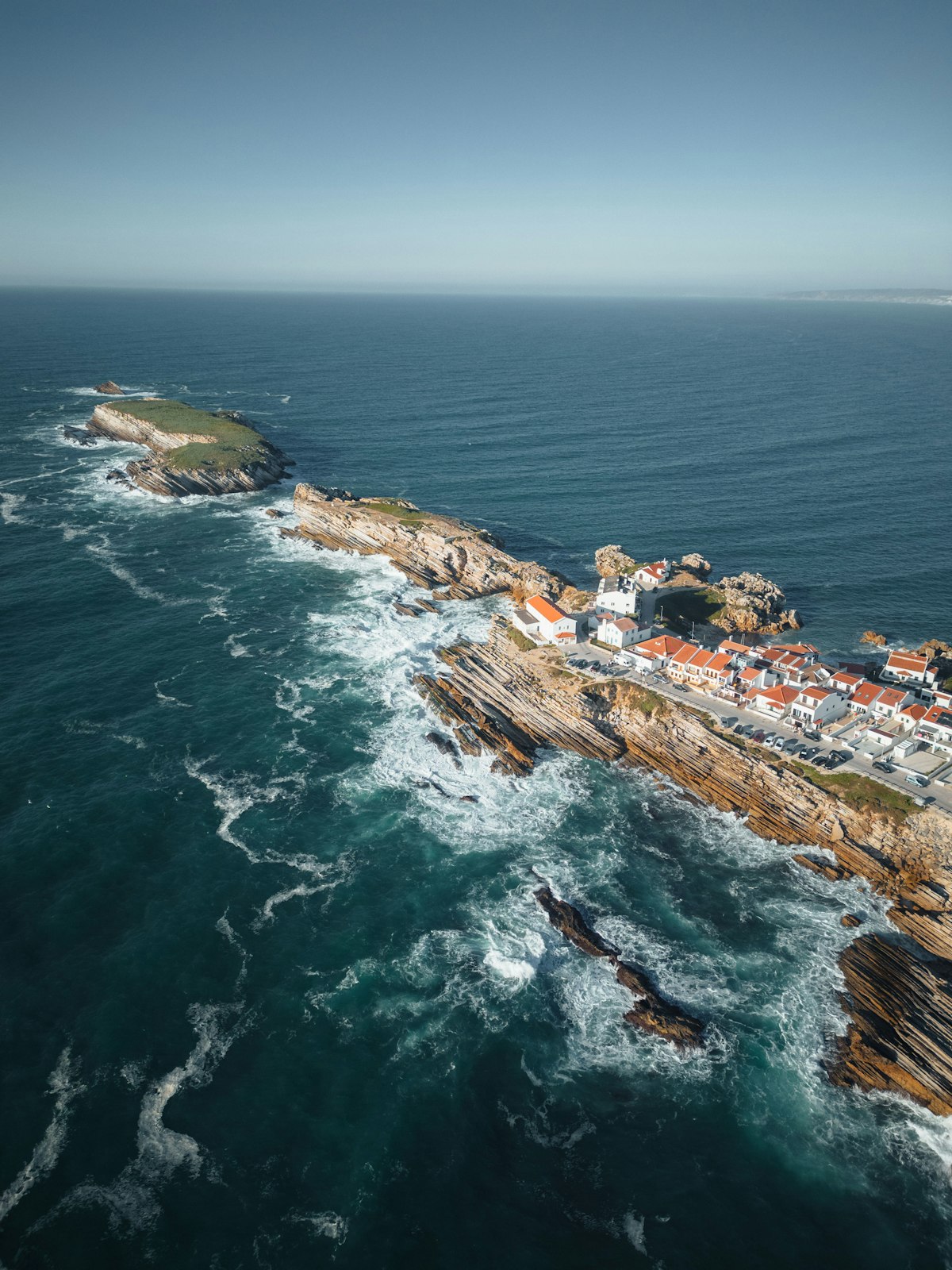
We’re planning our move to Portugal’s Silver Coast — the stretch of Atlantic coastline running from Torres Vedras up to Figueira da Foz — because it offers something the Algarve and Lisbon simply can’t: real affordability, genuine Portuguese communities, and enough space for kids to actually run around.
A note on these numbers: We haven’t moved yet. Everything below is our planning budget, built from Idealista listings, insurance quotes, expat forums, and conversations with families already living there. These are the numbers we’re working with — not numbers we’ve lived. We’ll update this post once we’re on the ground and can verify them firsthand.
Here’s our honest research-based breakdown of what family life on the Silver Coast looks like in 2026.
What Is the Silver Coast, and Why Do Families Choose It?
The Silver Coast (Costa de Prata) is Portugal’s most underrated region. It runs about 150 km north of Lisbon, taking in towns like Peniche, Óbidos, Nazaré, São Martinho do Porto, and Caldas da Rainha. It’s less hyped than the Algarve, less expensive than Cascais, and significantly more liveable for families than central Lisbon. Independent cost-of-living trackers like Numbeo back this up, consistently ranking Portugal’s smaller coastal towns well below Lisbon and the Algarve hotspots.
The towns are manageable in size — walkable centres, local markets, schools within reach — and the Atlantic beaches are some of the best in Europe. For families with children, it hits a sweet spot that bigger expat hotspots simply can’t match.
Cost of Living Portugal: Silver Coast Monthly Budget for a Family of 4
The single biggest variable is school choice. Before the full breakdown, here are the three realistic scenarios:
| Scenario | School | Monthly Budget |
|---|---|---|
| 🟢 Budget-comfortable | Public school (free) | €2,500 – €3,200 |
| 🟡 Mid-range | Local private/bilingual | €3,500 – €4,200 |
| 🔴 Full-expat | International school (2 kids) | €4,500 – €6,000 |
Here’s what the detailed breakdown looks like across all categories:
| Category | Monthly Cost (€) |
|---|---|
| Rent (3-bed house or apartment) | 900 – 1,800 * |
| Groceries | 600 – 800 |
| School fees (local private or public) | 0 – 1,200 |
| Health insurance (family) | 100 – 200 |
| Car (fuel, insurance, maintenance) | 200 – 350 |
| Utilities (electricity, water, internet) | 150 – 220 |
| Dining out (2–3x per week) | 300 – 450 |
| Activities & sports for kids | 100 – 200 |
| Miscellaneous / clothing / personal | 200 – 300 |
| Total | €2,550 – €5,120 |
* Rent range reflects inland towns (lower end) to coastal towns like Peniche (upper end). Source: Numbeo, June 2026.
Let’s break each category down.
Housing: The Biggest Cost — and the Biggest Saving vs. Lisbon
Rent on the Silver Coast is where you’ll feel the biggest difference compared to Portugal’s more popular regions.
A three-bedroom house or apartment in inland towns like Caldas da Rainha or São Martinho do Porto typically runs between €900 and €1,400 per month. In coastal towns like Peniche — where demand from surfers, expats, and weekenders pushes prices up — expect €1,400–€1,800 per month for the same size. In Nazaré or the hillside villages around Óbidos, you can often find spacious homes with gardens in the €700–€1,000 range.
Compare that to Lisbon (€2,000+ for a family-sized apartment) or Cascais (€2,500+), and the difference is immediate.
If you’re buying, entry-level properties start around €150,000–€200,000 for a three-bedroom townhouse needing some work. Renovated homes in good locations typically run €250,000–€450,000. Beachfront or sea-view properties push higher, but are still dramatically cheaper than equivalent properties in the Algarve.
What we found in our research: After spending hours on Idealista, cross-referencing expat forum discussions, and looking at where international school catchment areas actually are, Peniche and Caldas da Rainha keep coming up as the best value-to-lifestyle combination for families. Óbidos is stunning, but rental prices there have risen sharply over the past two years as its popularity has grown — the numbers no longer make the same sense for families on a realistic budget.
One tip before you sign a 12-month lease: book a short stay first and test the neighbourhood in person. A week or two in a Booking.com rental is cheap insurance against committing to the wrong street — and it lets you sanity-check these budget numbers against real local prices.
Schools: The Decision That Shapes Your Budget Most
This is the number families on the Silver Coast wrestle with most.
Public Portuguese Schools (Free)
Public schools are genuinely good and completely free. For younger children (under 8), immersion works remarkably well — most kids are conversational within 6–12 months. The curriculum is rigorous by European standards, and class sizes are manageable outside of larger towns.
The challenge: instruction is entirely in Portuguese, and for older children or those joining mid-year, the transition can be tough.
Local Private Schools (€300–€600/month)
Several private Portuguese schools offer bilingual programs or more international-friendly environments. These are significantly cheaper than full international schools and a popular middle ground for expat families.
International Schools (€800–€1,400/month)
The Silver Coast has a small number of international schools, including the International School Torres Vedras and the Leiria International School — both within driving distance of most Silver Coast towns. Fees run roughly €900–€1,270 per month per child, which adds up fast for two kids.
For many families, the calculation works out to: public school for a year or two while the kids adapt, then reassess.
Healthcare: Better Than You’d Expect, Cheaper Than Home
Portugal has a public healthcare system (SNS) that’s available to all legal residents — including your family. Quality is solid, though waiting times can be long for specialists in smaller towns.
For a family, most expats opt for private health insurance to complement the public system. A basic Portuguese domestic family policy starts around €100–€150/month, but coverage is typically limited to Portugal and may exclude pre-existing conditions or specialist care.
For broader international coverage — important if you travel frequently, have ties to other countries, or want cross-border peace of mind — expat-specific insurers are worth considering. We’ve been researching options like HanseMerkur (DE) — German-regulated, useful if you’re moving from Germany or Austria — and HanseMerkur NL for families coming from the Netherlands. Both offer strong inpatient, outpatient, dental, and repatriation coverage.
Another option worth checking is Care Concept, a German-based insurer that specialises in long-term coverage for expats and cross-border families. Their tariff finder covers everything from the transition period before you enrol in Portugal’s SNS to long-stay international plans — particularly relevant if your family is moving from Germany, Austria, or Switzerland.
For the gap before any of that begins — scouting trips, or the weeks between leaving and being registered here — we’ve been looking at DR-WALTER PROTRIP WORLD. It can be taken out even after you’ve already travelled and runs for up to 12 months, which is what makes it different from the long-term policies above.
What this actually costs: A comprehensive family expat health plan runs roughly €150–€250/month for a family of four with meaningful coverage levels — still far less than equivalent private coverage in the UK or Germany.
Getting Around: You Will Need a Car
Let’s be direct: outside of the larger towns, public transport on the Silver Coast is limited. Trains connect some coastal towns to Lisbon, and intercity buses run regularly, but for daily family life — school runs, weekend trips, supermarket runs — you need a car.
Monthly car costs for a family (fuel, insurance, occasional maintenance) run €200–€350. Portuguese fuel prices are roughly in line with the EU average. Car insurance is noticeably cheaper than in the UK or Germany.
If you’re visiting first or between moves, rental car comparison platforms can offer competitive rates for longer-term rentals across Portugal — worth checking for anything over a week, where they tend to beat the main airport desks on value.
Food and Eating Out: One of the Best Surprises
This is where Portugal genuinely delivers. Weekly grocery shopping for a family of four costs €120–€180 at local supermarkets (Pingo Doce, Continente, Lidl). If you shop at local markets for fruit, vegetables, and fish — which on the Silver Coast means incredibly fresh Atlantic catch — you can do it for less.
Eating out remains very affordable by Western European standards. A proper sit-down dinner for four at a local Portuguese restaurant (not a tourist trap) typically costs €30–€60 including drinks. A family lunch on a Sunday — grilled fish, soup, dessert, wine — runs €40–€70 and is one of the genuine pleasures of life here.
Kids’ activities like surfing lessons in Peniche, football clubs, and swimming appear to be cheap and often run through local associations for €30–€60/month per child — something we’re really looking forward to.
Utilities and Internet
Monthly utilities for a three-bedroom home run €150–€220, covering electricity, water, and high-speed internet (fibre is widely available on the Silver Coast). Summers are cheap — you won’t run heating. Winters are mild but damp, and heating costs can push bills up in December–February.
The Real Bottom Line
Pulling all of this together, here’s what the cost of living Portugal actually requires for a family of four on the Silver Coast:
- Tight but comfortable (public school, modest rental): €2,500–€3,200/month
- Comfortable with local private school: €3,500–€4,200/month
- Comfortable with international school: €4,500–€6,000/month (for two children)
Compare that to the equivalent lifestyle in the UK (£5,000–£8,000/month for a family), Germany (€4,500–€7,000), or the US ($6,000–$10,000 in a mid-cost city), and the Silver Coast makes a compelling case.
What income do you actually need? As a rough guide: the budget scenario (public school) works comfortably from around €3,500–€4,000 net/month household income. The mid-range scenario sits comfortably at €5,000–€6,000 net/month. International school for two kids is a different category — you’re looking at €7,000+ net/month to live without constant budget pressure. Remote workers, freelancers, and pensioners with German or UK income levels often find the Silver Coast unlocks a standard of living that simply wasn’t available to them at home.
The key insight: the Silver Coast is not cheap in the way that requires sacrifice. It’s affordable in a way that lets you actually live — with a house, a garden, good food, and your kids in the water every weekend.
What Nobody Tells You (That We’ve Discovered in Our Research)
A few things that don’t show up in most cost-of-living articles:
Bureaucracy takes time and occasionally money. Getting your NIF, residency permit, and opening a Portuguese bank account involves paperwork, waiting, and sometimes a lawyer or fiscal representative. Budget €300–€800 for initial setup costs — we’re already factoring this in. We’re also setting up a Wise account before we go — a multi-currency account makes it much easier to pay Portuguese bills and receive income from abroad without losing money to bad exchange rates while your local bank account is still being sorted out.
The first year costs more than the steady state. You’ll eat out more while figuring out the supermarkets, take more day trips to explore, and spend on things you forgot to pack. Most experienced expats recommend a €3,000–€5,000 buffer for year one.
Healthcare is good but rural areas are underserved. In Peniche or Caldas da Rainha you’ll have solid options. In a smaller village, you might drive 30 minutes for a GP appointment. Private insurance helps bridge this gap significantly — one reason we’re planning to sort that out before we arrive.
Is the Silver Coast Right for Your Family?
It’s not for everyone. If you need a large expat community, easy English-language everything, and consistent warm winters, the Algarve suits you better. If you want urban energy, Lisbon is calling.
But if you want authentic Portugal, Atlantic beaches, space for your kids to grow up differently, and a cost of living that genuinely lets you breathe — the Silver Coast looks like one of the best-kept secrets in Europe for families.
We think it’s the right call for us. The numbers add up, the lifestyle fits, and we can’t wait to see it first-hand. We’ll keep sharing everything we learn along the way — the planning, the logistics, and eventually the reality on the ground.
Planning your own family move to the Silver Coast? Get in touch — we’d love to compare notes.
Follow Our Portugal Planning
We’re documenting this move as we go — what the paperwork actually costs, where our planning turns out to be wrong, and what we’d do differently. No fixed schedule and no spam: we write when we’ve learned something worth passing on.
Everything we worked out planning our own family move to the Silver Coast — the visa, the schools, the taxes, what it actually costs — is now one step-by-step guide, a workbook you fill in as you go, and a cost calculator built on real numbers.
See the Family Move Planner — from €12 →