Last updated: September 2026
📢 Disclosure: This post contains affiliate links. If you book or buy through them, we earn a small commission at no extra cost to you. We only link to products we’re genuinely researching for our own move.
We haven’t moved yet. We own a house in Ferrel, a village outside Peniche, and we’re deep in the research phase of relocating our family there permanently. So when people ask “which Silver Coast town should we live in?” — a question we get constantly once people hear about our plan — we can’t answer as residents. We can answer as a family who has spent months comparing these towns on paper, in forums, on Idealista, and on scouting trips, trying to work out where a family with young kids actually thrives versus where it just looks good in photos.
One thing upfront, because it matters for how much to trust anything below: we already own property in Peniche, so we are not a neutral party. We’ve tried to correct for that by being explicit, every time, about where the numbers point somewhere other than our own choice. Where they don’t line up with what we’d like to hear, we’re saying so.
This isn’t a ranking of the best Silver Coast towns for families with one winner and five runners-up. It’s a filter. Six towns, evaluated on the things that actually decide this for a family: can you afford a real house, is a hospital within reach, what’s the school situation, and what kind of day-to-day town do your kids grow up in. Work through it in that order and you’ll land on the town that fits your family — not ours.
Quick Comparison: Six Silver Coast Towns for Families
| Town | Population | Housing (3-bed, monthly) | Nearest hospital | Vibe | Best for |
|---|---|---|---|---|---|
| Peniche (+ Ferrel) | ~15,600 (town); ~26,400 (municipality)† | €900–€1,400 | Own unit in town (Hospital São Pedro Gonçalves Telmo) | Surf town, working harbour, real Portuguese life | Coast + community + our own experience (see bias note above) |
| Caldas da Rainha | ~52,000 (municipality)‡ | €900–€1,400 | Own unit, regional headquarters | Proper town: market, shops, culture, not a village | Families with no existing tie to the region who want the most infrastructure |
| Óbidos | ~3,100 (walled town); ~14,000 (municipality)§ | Rising fast — no longer the value play it was¶ | 10-minute drive to Caldas da Rainha | Postcard-medieval, festival-heavy, popular with visitors | Couples and retirees more than budget-conscious families |
| Nazaré | ~10,000 (town); ~14,900 (municipality, 2021 census)# | €700–€1,000 (hillside) | Drive to Caldas da Rainha or Alcobaça | Fishing town turned big-wave surf destination | Families who want beach life and don’t mind summer crowds |
| São Martinho do Porto | ~2,900 (parish)‖ | No town-specific data — regional estimate only†† | Drive to Caldas da Rainha or Alcobaça | Sheltered horseshoe bay, genuinely calm water | Families prioritising the calmest, safest water for young kids |
| Foz do Arelho | ~1,300 (parish)** | No town-specific data — regional estimate only†† | 15-minute drive to Caldas da Rainha | Lagoon + ocean side by side, quiet, residential | Families who want space and are fine borrowing Caldas da Rainha’s infrastructure |
†Population figures for Peniche from Wikipedia/HospitalBy, town vs. municipality distinction as of recent estimates.
‡Caldas da Rainha municipality population per City-Facts/Trawellino.
§Óbidos: walled town proper vs. broader municipality, per AZ Nations and Portugalist; municipality grew roughly 12% between 2021–2025 on positive migration.
¶Óbidos rents have risen sharply as the town’s tourism profile has grown — see our cost-of-living breakdown for the detail.
#Nazaré: 2021 census figures per Wikipedia/CityPopulation; town centre estimate separate from full municipality (includes Valado dos Frades and other parishes).
‖São Martinho do Porto: parish population, most recent widely cited figure is from the 2011 census (~2,868); we haven’t found a more recent official count.
**Foz do Arelho: parish population, 2011 census figure (~1,339), a civil parish of the Caldas da Rainha municipality.
††We could not find reliable town-specific rental listings for these two parishes in our research. Rather than guess a number, we’re flagging the gap. Expect the same broad regional band as Peniche and Nazaré (roughly €700–€1,400) until we have better data — treat any number here as a placeholder, not a researched figure.
A note on these numbers: Some population figures are the most recent officially published counts, which for the smaller parishes goes back to the 2011 census — Portugal’s statistics office (INE) hasn’t released more granular updates for every parish since. We’re flagging that rather than pretending the numbers are fresher than they are. Housing figures come from our own research for the cost-of-living guide — Idealista listings and expat forum discussions, not lived experience.
Step 1: Budget — Where the Real Differences Are (and Where They’re a Tie)
Start here, because it eliminates towns fast.
Peniche and Caldas da Rainha are a genuine tie on housing cost — both run €900–€1,400/month for a proper three-bedroom family home. That’s not a data gap or a rounding error on our part; it’s the actual finding. If you’re choosing between these two, price shouldn’t be the deciding factor — what kind of town you want to live in should be (more on that in Step 4).
Nazaré’s hillside areas run cheaper — €700–€1,000/month for family-sized homes with more space, according to our cost-of-living research. That’s real savings, with real trade-offs covered below.
Óbidos is the one town we’d tell most family budgets to rule out here. Rents have risen sharply as the town’s popularity has grown — in our research, the numbers stopped making sense next to Peniche or Caldas da Rainha a short drive away. If budget is a genuine constraint, cross Óbidos off now and don’t spend more time on it below.
São Martinho do Porto and Foz do Arelho: we don’t have reliable town-specific numbers. We didn’t find solid listing data for either, and we’re not going to invent a range to fill the gap. Budget for the same regional band as Peniche and Nazaré, and verify directly with a local agent before you commit — this is the one place in this article where you should trust our honesty about the gap more than any number we could give you.
If you’re paying a holding deposit, a first month’s rent, or moving money between currencies while you’re comparing towns, that’s worth sorting out before you need it, not during. We’ve set up a Wise multi-currency account for exactly this — it avoids the poor exchange rates and delays that come with a regular bank transfer while you’re not yet fully set up with a Portuguese account.
Step 2: Healthcare — One Network, Three Physical Doors
This applies to all six towns, so we’re explaining it once instead of repeating it six times.
Peniche, Caldas da Rainha, and Torres Vedras each have their own hospital unit, but as of 2024 they’re no longer separate — they’re integrated into a single entity, the Unidade Local de Saúde do Oeste (formerly Centro Hospitalar do Oeste), which also runs the primary care health centres across the region. Its coverage area includes Caldas da Rainha, Óbidos, Peniche, Bombarral, Torres Vedras, Cadaval, and Lourinhã, plus parts of Alcobaça and Mafra — which covers every town on this list.
In practice: if you live in Óbidos, Nazaré, São Martinho do Porto, or Foz do Arelho, your nearest hospital-level care is a drive to Caldas da Rainha (or Peniche, if you’re closer). If you live in Peniche itself, you have a unit in town. None of these towns has a hospital that operates independently of that network — worth knowing before you assume “there’s a hospital in town” means full emergency and specialist services everywhere.
For most families, day-to-day care is a private supplementary plan alongside the public system — we go into the actual numbers for that in our cost-of-living breakdown.
Filter: if a hospital in town rather than a drive matters to you — say, because you have a child with an ongoing medical need — that narrows you to Peniche or Caldas da Rainha specifically. Everyone else is trading a short drive for other advantages.
Step 3: Schools — The Same Honest Answer, Wherever You Land
We’ve written about this in more depth elsewhere, so the short version here: the Silver Coast has a small number of international school options (International School Torres Vedras and Leiria International School are the two most commonly mentioned), and none of these six towns is walking distance from either. If your child needs a specific international curriculum, you’re commuting or relocating your idea of “which town” around that school, not the other way round.
Public Portuguese schools are solid at primary level in every town on this list, and younger children in particular tend to adapt faster than expected. This is the single biggest planning variable for most families looking at this region — we break down the actual cost difference between public, private-bilingual, and international paths in our cost-of-living guide.
Filter: if international school is non-negotiable, every town on this list involves the same commute — this step doesn’t differentiate between them. It only differentiates the Silver Coast from regions like Lisbon or Cascais, which we cover in our regional comparison.
Step 4: Community — What Kind of Town Do You Actually Want to Live In
If you’ve made it this far without eliminating a town on budget, healthcare access, or schools, this is where the real differentiation lives — not in the numbers, but in what daily life actually feels like.
Peniche & Ferrel. A working fishing port and one of the best surf towns in Europe — a genuine year-round economy that isn’t purely tourism, a real town centre, a market. This is where we already have a stake, so weigh our enthusiasm accordingly. What it isn’t: close to an international school, though for families using public school (most, here) that’s a smaller issue.
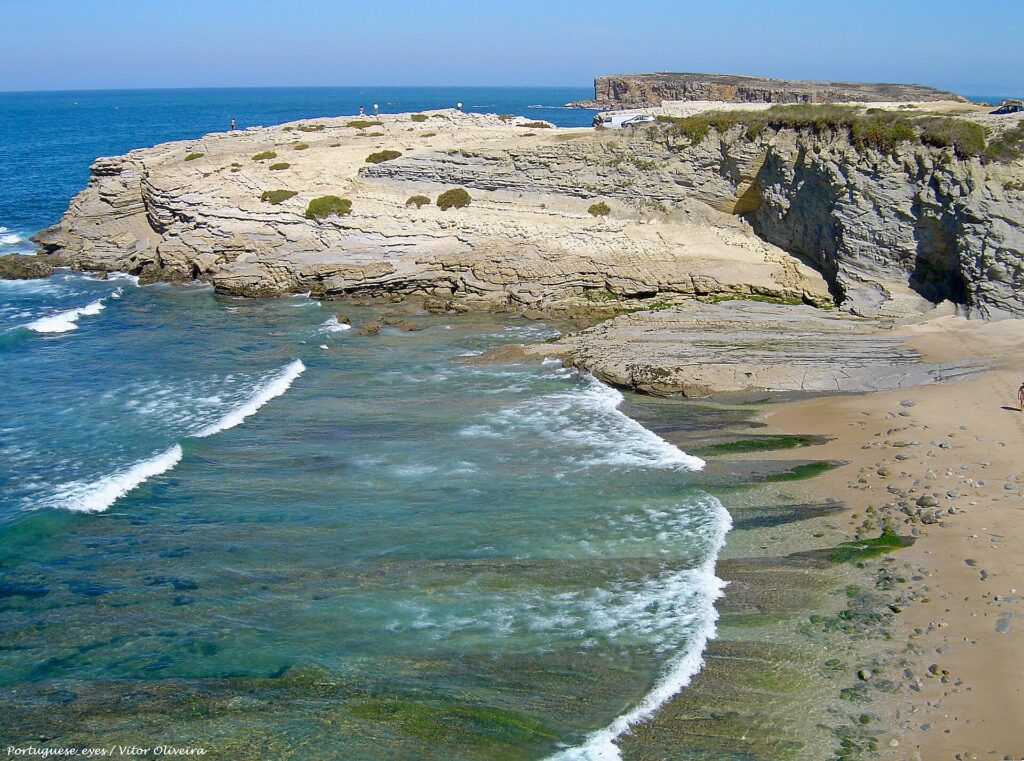
Caldas da Rainha. The largest town on this list by a wide margin, and the one that comes up most often in expat forums as the value-to-lifestyle sweet spot. A real weekly market, a full range of shops, the regional hospital headquarters, an arts and design university campus (ESAD) that gives the town a genuine cultural identity beyond “service town.” What it isn’t: a beach village — the coast is a short drive, not a walk. We’ve written a separate, much deeper family guide to living in Caldas da Rainha if it’s on your shortlist.
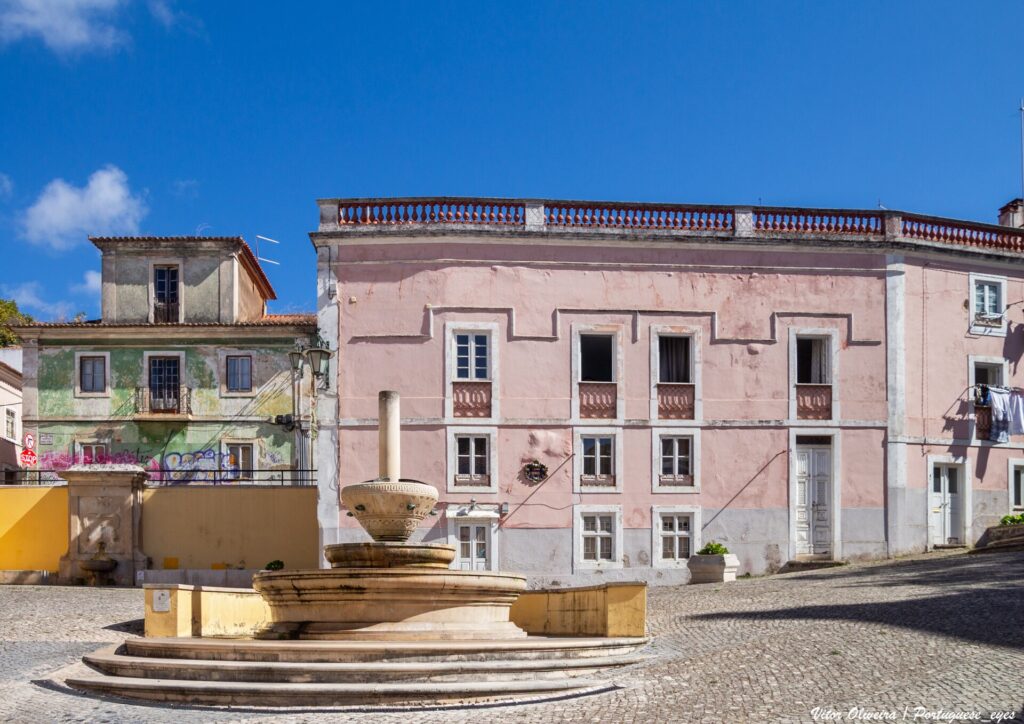
Óbidos. Genuinely stunning, a walled medieval town with real cultural life (weekly markets, festivals, a well-known chocolate festival). If you’ve already ruled it out on budget in Step 1, this is the entry that explains why it’s still worth visiting even if you don’t move there: it leans toward visitors, retirees, and remote-work couples more than young families watching a budget.
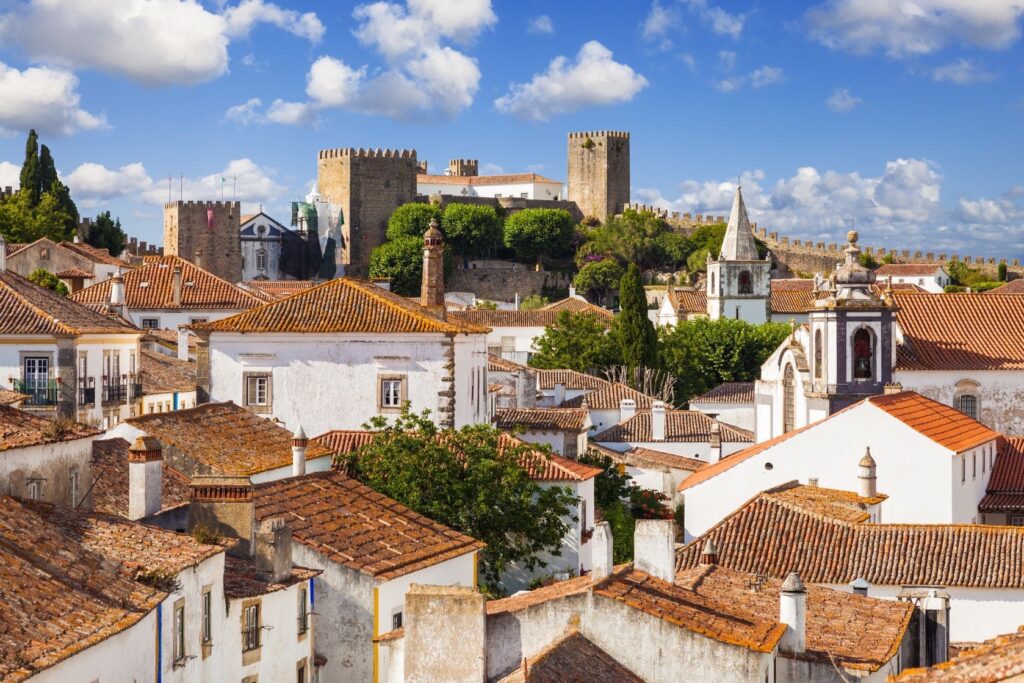
Nazaré. Famous for the record-breaking big-wave surfing at Praia do Norte, but behind that, a real fishing town. The trade-off for the cheaper hillside housing in Step 1: a town that swells enormously in summer tourism, and a demographic that skews older — over a quarter of residents are 65+, per the most recent census. Worth thinking about whether that gives your kids the peer group you’re hoping for.
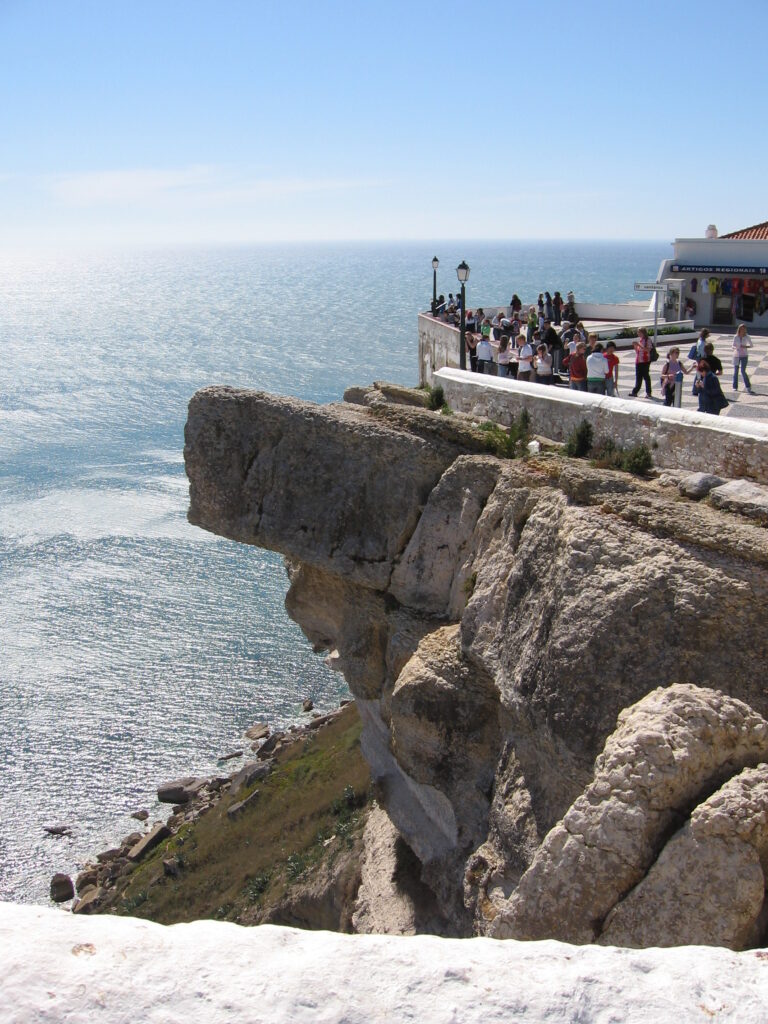
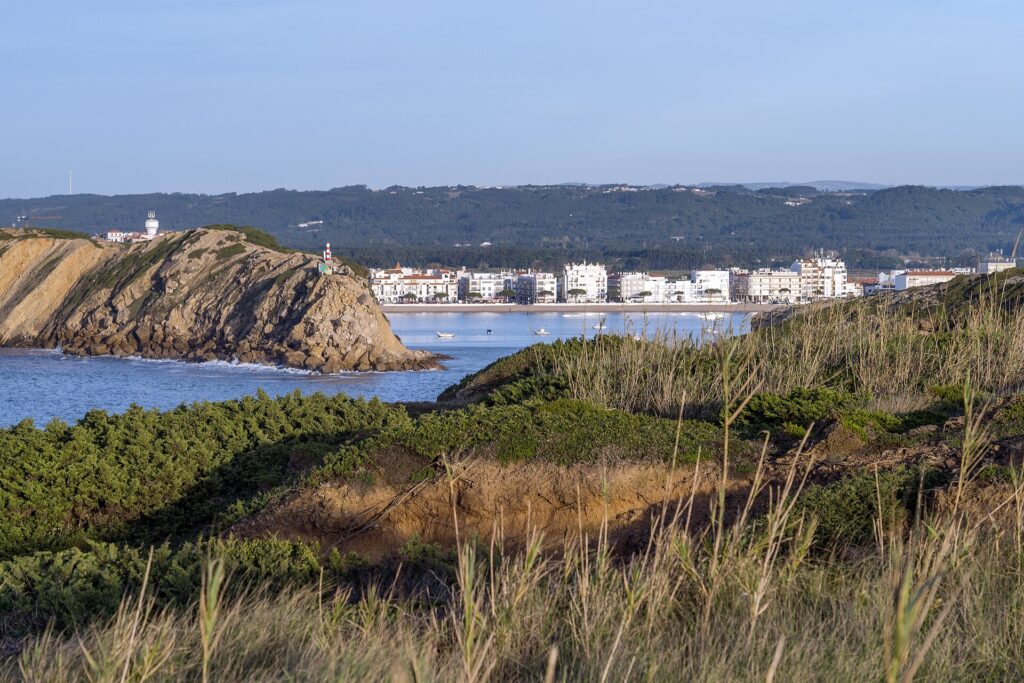
São Martinho do Porto. One standout feature: a nearly enclosed, shell-shaped bay that creates calm water, sheltered from the open Atlantic swell that defines most of this coastline. That’s a genuine geographic fact, not just marketing — the bay’s shape physically blocks the open ocean. Local tourism sites market it as one of Portugal’s best family beaches on the strength of that; we can’t independently verify “best,” but the shelter itself is real and easy to see on a map. It’s also small, with limited services — for anything beyond daily basics, you’re driving to Caldas da Rainha or Nazaré.
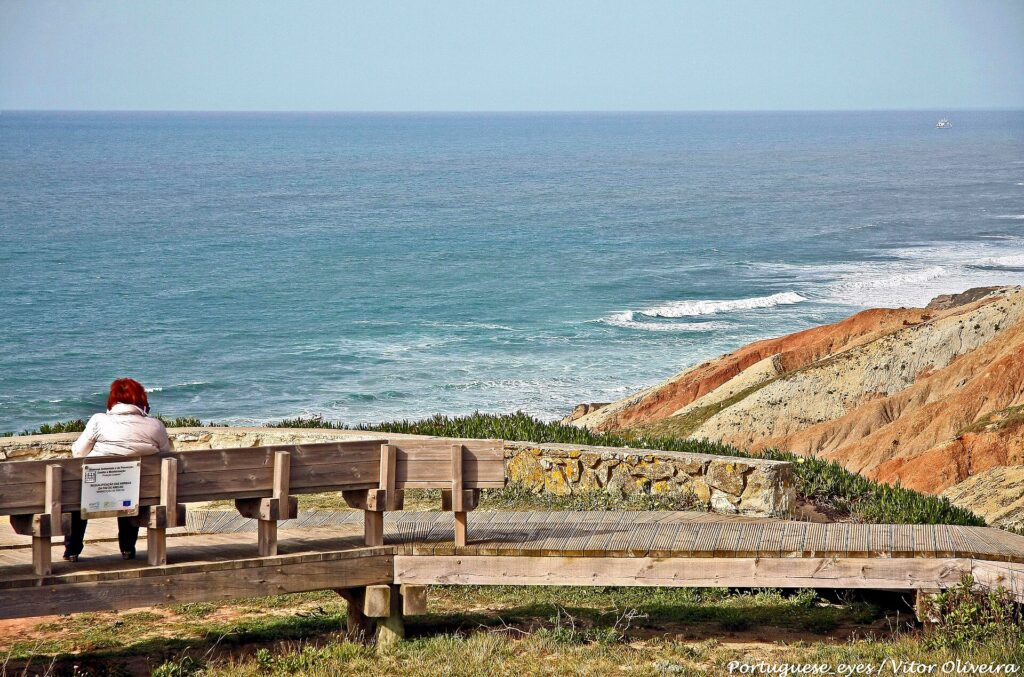
Foz do Arelho. The smallest, quietest town on the list, sitting where the Lagoa de Óbidos — Portugal’s largest coastal lagoon — meets the Atlantic. Flat water for kids to paddle on one side, real surf on the other, within a few hundred metres. It’s administratively part of Caldas da Rainha, a 15-minute drive from the centre — you’re deliberately borrowing Caldas da Rainha’s hospital, shops, and schools while living somewhere quieter.
FAQ: Choosing Between the Best Silver Coast Towns for Families
Which Silver Coast town is best for families with young children?
There’s no single best — it depends on which step above is your hard constraint. If budget and a hospital in town both matter, that’s Peniche or Caldas da Rainha. If water safety for young kids is the top priority and you’re fine driving for everything else, that’s São Martinho do Porto. Read the steps in order and stop at the first one that eliminates towns for you.
Is Óbidos a good place to raise a family?
It’s beautiful and culturally rich, but rental prices have risen sharply in recent years, and in our research it’s become harder to justify on a typical family budget compared to Peniche or Caldas da Rainha, both a short drive away. It tends to suit retirees, remote-work couples, and higher-budget families more than budget-conscious ones.
Do all these towns have hospital access?
Yes, but not all locally. Peniche and Caldas da Rainha each have their own hospital unit, both part of the Unidade Local de Saúde do Oeste (formerly Centro Hospitalar do Oeste). Óbidos, Nazaré, São Martinho do Porto, and Foz do Arelho rely on a drive to Caldas da Rainha or Peniche for hospital-level care.
How far are international schools from these towns?
Every town on this list involves a real commute to the region’s two main international schools — International School Torres Vedras and Leiria International School. There is currently no Silver Coast town where an international school is a short local trip; it’s a genuine trade-off of choosing this region.
Which town would you actually choose?
Peniche and Ferrel — because that’s where our house already is. We want to be fully upfront that this is a values choice for us, not a claim that it’s the objectively best pick for every family. On the numbers alone — housing cost, hospital access, and infrastructure, with no sentimental attachment to any one town — Caldas da Rainha is the town we’d point a family with no existing tie to the region toward first.
Follow Our Portugal Planning
We’re documenting this move as we go — what the paperwork actually costs, where our planning turns out to be wrong, and what we’d do differently. No fixed schedule and no spam: we write when we’ve learned something worth passing on.
Our own product · For families like yours
The Portugal Family Move Planner
The complete system for your move to the Silver Coast
No more guessing about visas, schools, taxes and costs. The planner walks you step by step through your family’s move to Portugal, built on the same research we did for our own move.
€39 one-time · instant access · no subscription · see all three products
Guide + Workbook
The Portugal Family Move Planner
PDF + Excel · Patrick Maus
For the full cost breakdown behind these numbers, read what it costs for a family of four on the Silver Coast in 2026. If you’re still comparing the Silver Coast against the Algarve, Lisbon, or Cascais more broadly, we’ve laid that out in our regional decision framework.
Getting between towns to compare them yourself is worth doing properly rather than from a laptop — when we’ve done our own scouting trips, we’ve booked accommodation through Booking.com for exactly this kind of multi-town trip.
All population and housing figures are drawn from public sources (Wikipedia, INE-derived population trackers, Idealista-based research) as cited inline, current as of our research in mid-2026. We are not yet Silver Coast residents and cannot speak from lived experience. Figures should be verified against current sources before making relocation decisions.