Silver Coast Portugal is the place we keep coming back to — not on a map, but in real life. There’s a moment that keeps coming back to me.
Sitting on the swing couch in the garden of a small house in Ferrel, a fishing village a few minutes from Peniche, espresso in hand, early enough that the air still has that morning chill, while my daughters chased a cat that very clearly did not want to be chased. The Atlantic was doing its thing somewhere just out of sight — grey, loud, completely unbothered by us. Nobody was on a schedule. Nobody needed to be anywhere.
That house has been in my wife’s family for years. I’m Patrick, by the way — German, living in Paris, and if this is your first time here, you can get the longer version of who we are on our About page. For now, the short version: it’s not a holiday rental we found on a map, and it’s not a place we “discovered” the way relocation blogs love to describe their big epiphany. We just go there. We’ve been going there for years, the way you go to a place that’s already yours, long before any of this turned into a five-year plan to actually live there.
So when people ask us why Portugal, and more specifically why the Silver Coast, the honest answer isn’t a spreadsheet. It’s that house, that swing couch and morning espresso, and a region we already know in a way you can’t get from a week’s vacation.
But “we like it there” isn’t a reason you can build a relocation plan on — not when you’ve got two kids, a mortgage in Paris, and a remote income that doesn’t exist yet. So let’s get into the actual region: what the Silver Coast is, why it’s different from the places everyone else is talking about, and why it made sense for a family like ours.
What exactly is Silver Coast Portugal?
If you’ve started researching Portugal, you’ve probably noticed the country gets carved up into tourist-brochure names: the Algarve, the Lisbon Coast, the Silver Coast, the Green Coast up north. Silver Coast Portugal — Costa de Prata in Portuguese — is the stretch of Atlantic coastline running roughly between Lisbon and Porto, covering parts of the Leiria, Coimbra, and Aveiro districts depending on whose map you’re looking at.
It’s long. We’re talking somewhere around 150 to 240 kilometers of coastline, depending on where you draw the line, which means the Silver Coast Portugal region covers a lot of very different towns: medieval Óbidos, the surf town of Peniche, the giant-wave fame of Nazaré, the spa city of Caldas da Rainha, the canals of Aveiro further north. Calling it one region is a bit like calling the whole U.S. East Coast “the coast” — technically true, practically not that useful until you zoom in.
For us, Silver Coast Portugal really means the cluster of towns around Peniche, Óbidos, and Caldas da Rainha — Ferrel included, even though it barely shows up on most maps. That’s the part we know, the part we’ll actually zoom in on as this blog grows.
How it’s different from the Algarve (and why that matters)
Almost everyone who hasn’t visited Silver Coast Portugal has heard of the Algarve instead. It’s the postcard: golf courses, golden cliffs, a huge British and Northern European retiree community, and prices to match its popularity. If you’re picturing “expats in Portugal,” you’re probably picturing the Algarve whether you know it or not.
The Silver Coast is, in a lot of ways, what the Algarve might have looked like before tourism fully took over. It’s generally considered more affordable, both for property and day-to-day costs, and it’s less built around the international retiree-and-tourist economy. We put the two side by side properly — schools, costs and how each place actually feels day to day — in Silver Coast vs. Algarve for families.
That cuts both ways: there’s less English-language infrastructure and a smaller international bubble to fall back into, but there’s also a lot more actual Portuguese life happening around you — fish markets that exist because locals shop there, not because tourists photograph them.
We didn’t pick Silver Coast Portugal over the Algarve through a comparison chart. We picked it because it’s where the family house already is. But the fact that it also happens to be the more grounded, less touristy, more affordable option? That’s a genuinely happy coincidence, and it’s a big part of why the plan still makes sense on paper, not just sentimentally.
The towns that make up “our” Silver Coast
A few names you’ll see repeated everywhere if you start researching this region, and that we can vouch for from actual time spent there rather than guidebook copy:
Peniche. A working fishing town that also happens to be a serious surf destination — Supertubos is one of the best-known breaks in Europe. It’s raw rather than pretty, in the best way, anchored by one of the largest fishing harbors in Portugal and the fish-processing plants that go with it; this is a town that smells like the sea because the sea is actually its business.
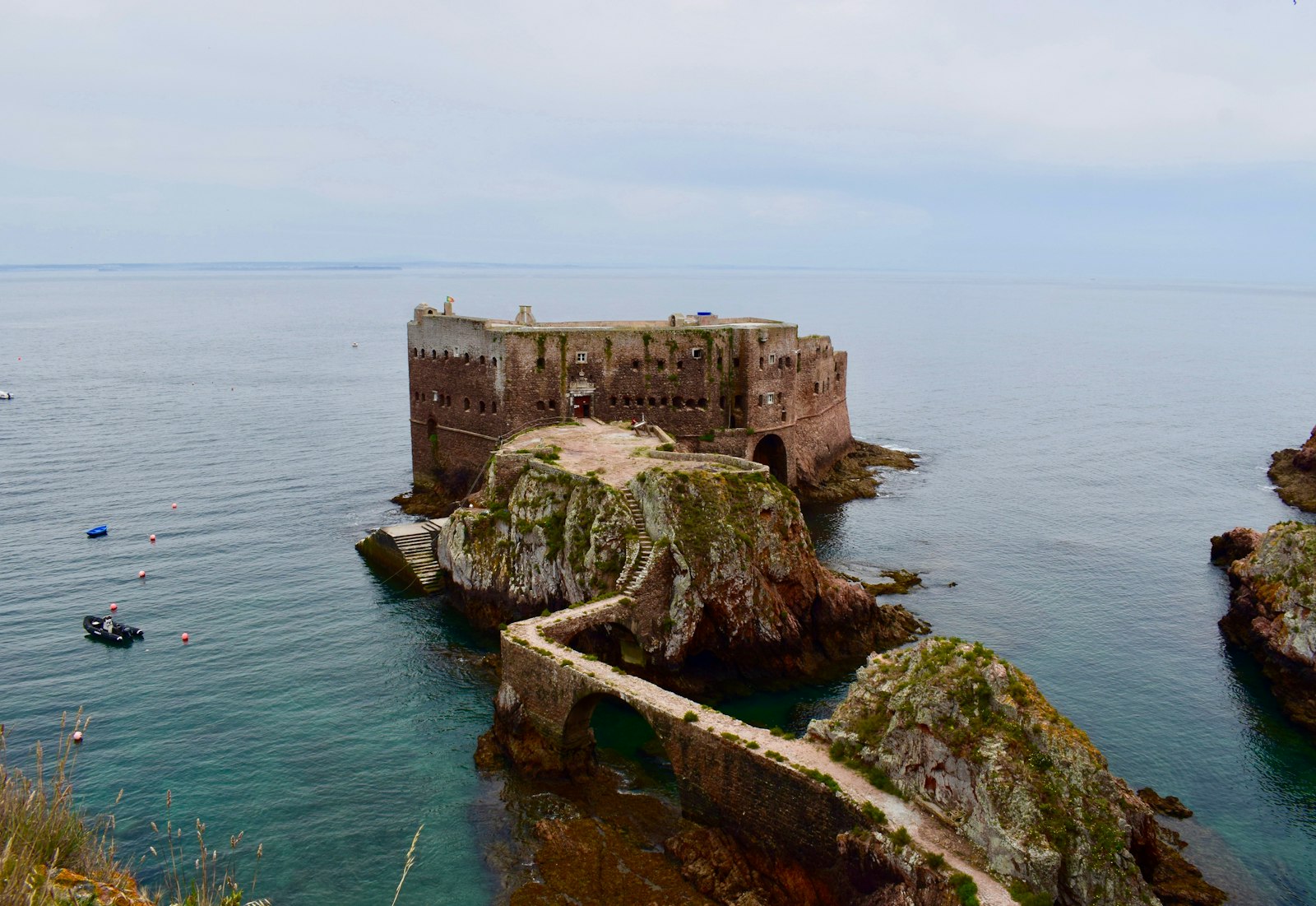
There’s also a wonderful weekly market here, the kind where you can pick up genuinely fresh fruit and vegetables, fish, meat, eggs, and honey, almost all of it from producers in the surrounding countryside rather than trucked in from somewhere else. From here you can catch a boat to the Berlengas Islands, a small protected archipelago just offshore that looks like it belongs in a different ocean entirely.
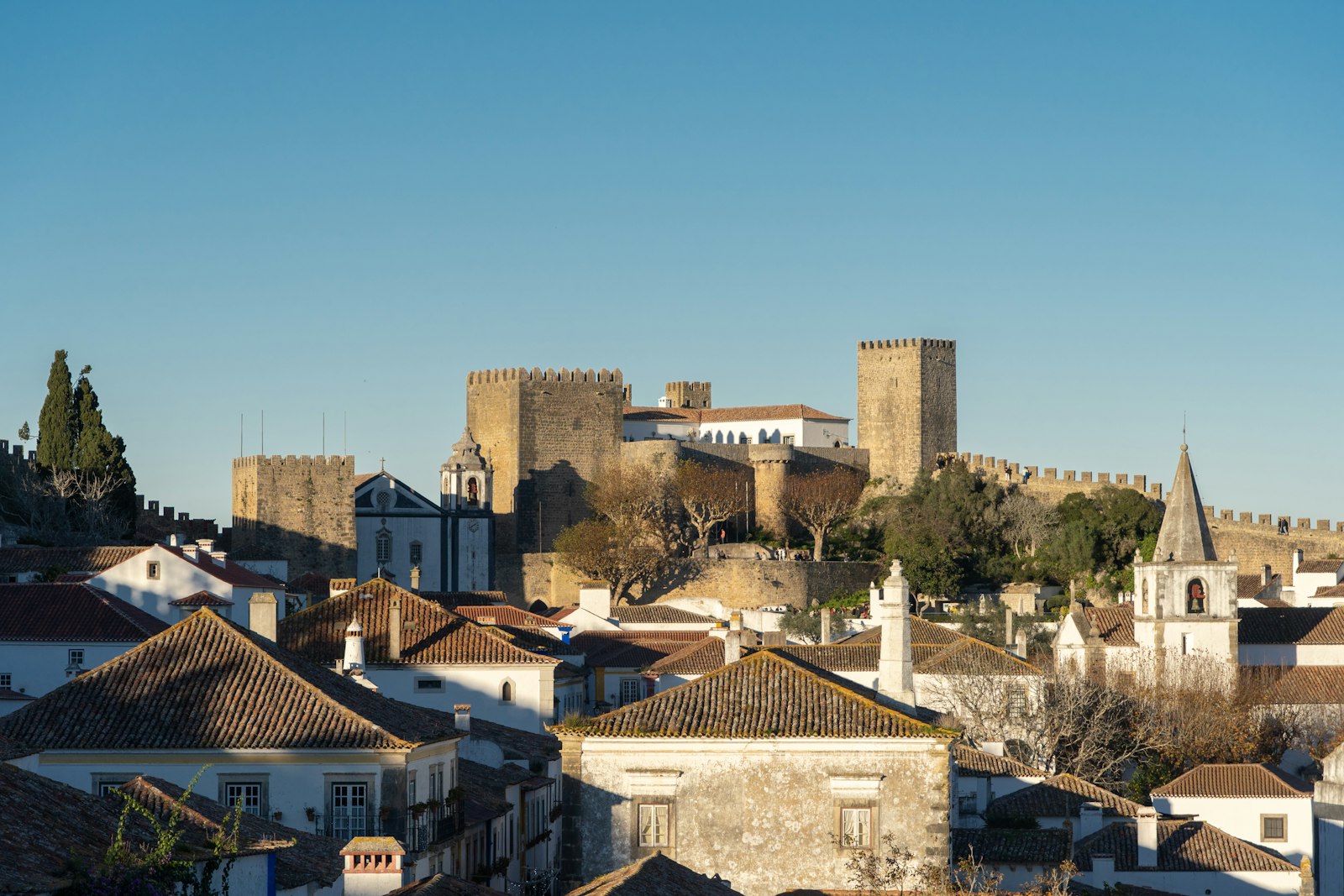
Óbidos. The postcard medieval town: white houses, a castle wall you can walk around, narrow streets built for foot traffic and not much else. Those same narrow streets are lined with cozy little restaurants and cafés, souvenir shops selling local crafts, and the town’s most famous export by far: Ginja de Óbidos, a sour cherry liqueur often served in a tiny chocolate cup, which Óbidos is known for well beyond its own walls. It’s a bit more polished and a bit pricier than its neighbors, but it’s also genuinely beautiful and it’s close enough that we end up there constantly.
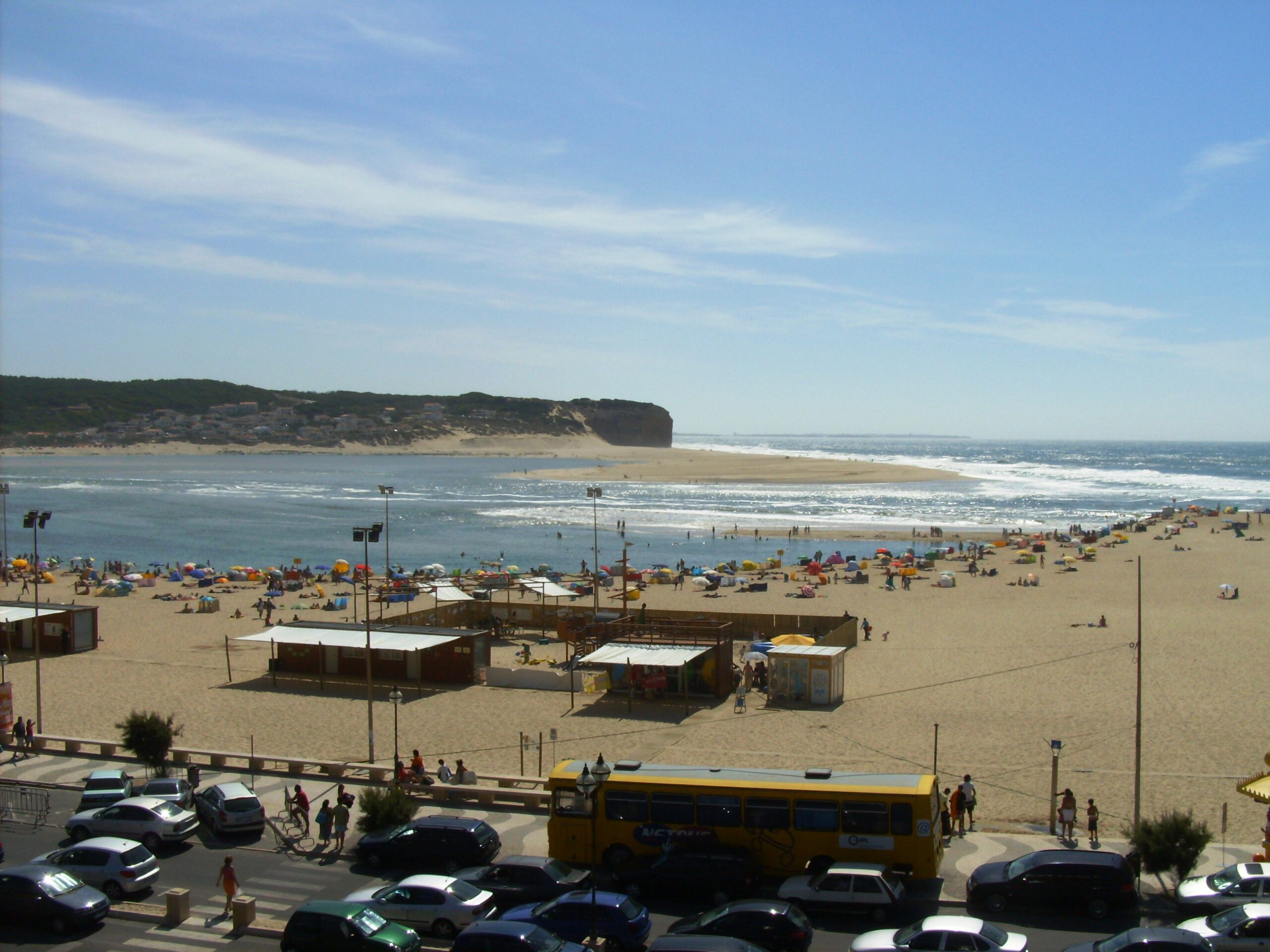
Foz do Arelho. Just down the road from Óbidos, where the Óbidos Lagoon meets the Atlantic. The lagoon side is calm, shallow, and warm enough for the kids to swim without us worrying — a rarity on a coastline this exposed — while the ocean beach is just a short walk across the dunes if anyone wants real waves instead. It’s quiet, a little sleepy outside of summer, and exactly the kind of in-between spot that doesn’t make the famous lists but ends up in our weekend plans more than almost anywhere else.
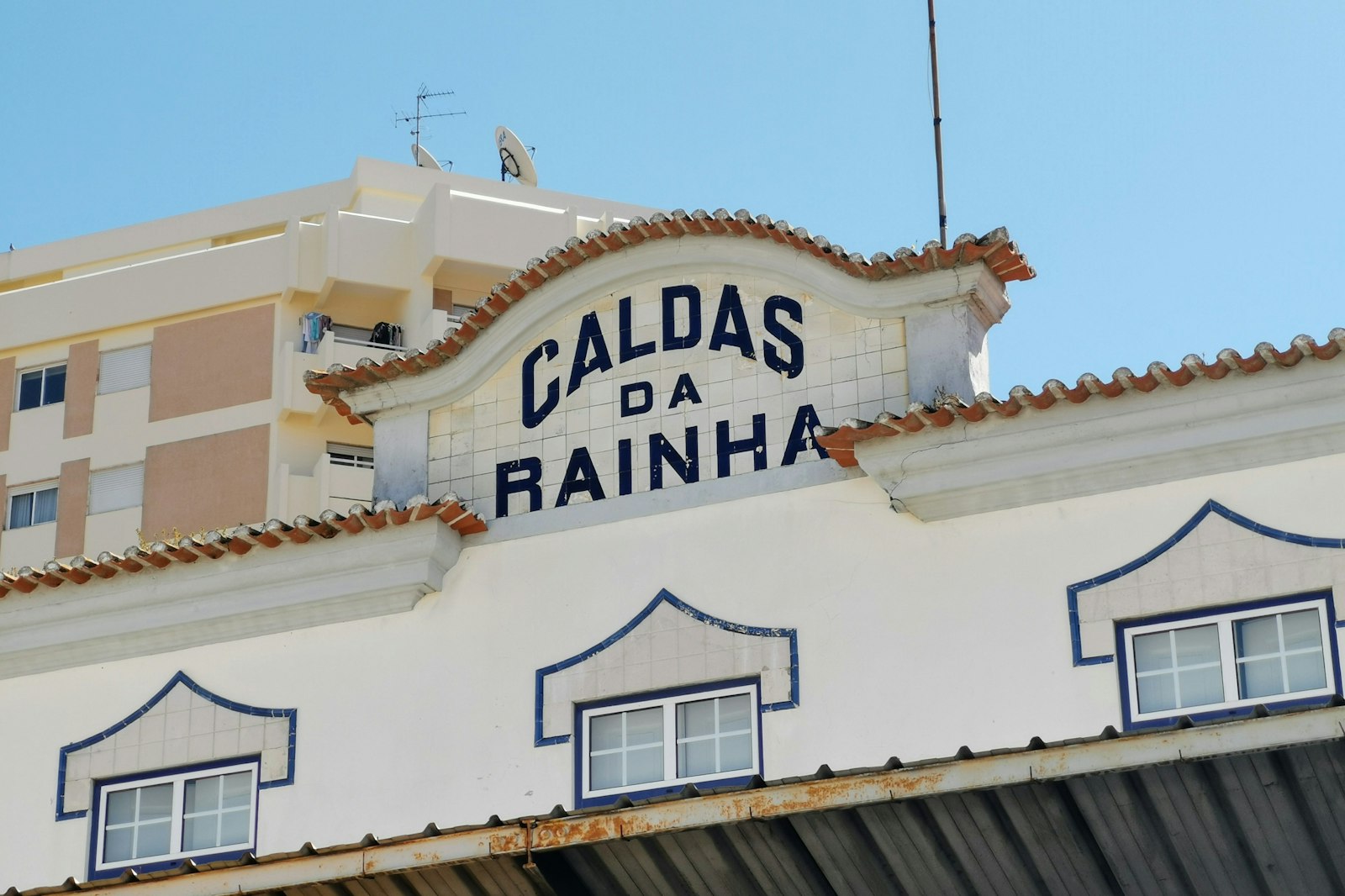
Caldas da Rainha. This is the one we keep underselling, and it shouldn’t be. Its old town has its own quiet beauty — elegant 19th-century buildings, the historic Parque Dom Carlos I, architecture that doesn’t shout the way Óbidos does but rewards a slow walk all the same. The park itself is one of our favorite spots in the whole region: a lush, green, genuinely beautiful botanical garden with a playground good enough that our daughters don’t want to leave, and a café right at its edge where we can sit with a coffee and actually watch them play instead of chasing them around.
And beyond the looks, it’s also the town that would actually carry our daily life. It has a real hospital (Hospital Termal, with an actual track record, not a tourist-season clinic), schools, a proper town center built around the Praça da Fruta market, and a creative streak that goes back generations — Caldas has been a center for ceramics and pottery in Portugal for well over a century, and you can feel it in the cafés, the shops, the museums.
It’s well connected too, sitting right on the A8 motorway with Lisbon under an hour away. It’s the kind of town that works in January just as much as it works in August, which, once you’re not on vacation anymore, turns out to be the thing that actually matters most.
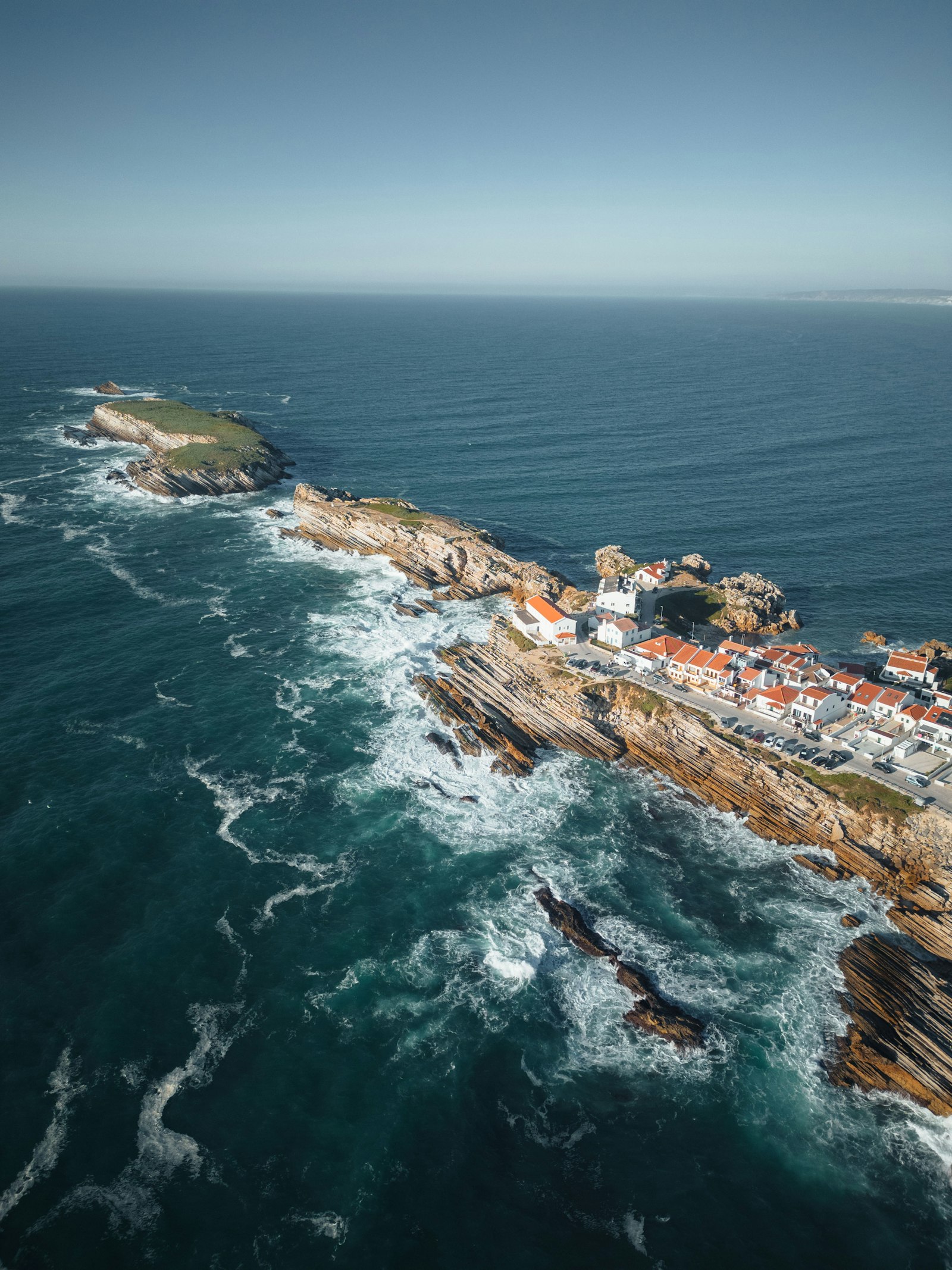
Ferrel/Baleal. Used to be the kind of place that wouldn’t show up on any “best villages” list, and in some ways still flies under the radar — but that’s changing fast. Ferrel and Baleal have become something of a place-to-be over the last few years, and the tourism here has noticeably grown: more visitors, more rentals, a busier summer than the one we first got to know.
The village has fully absorbed Baleal’s surf culture — surf schools on practically every corner, board racks leaning against garden walls, a steady stream of people who came for a season and somehow never quite left. It’s a laid-back, genuinely cool crowd, locals and lifers mixed in with the surf-school regulars, and that vibe is contagious even if you’re not the one paddling out.
Every August, the village’s size completely flips for a week during the Festa de Ferrel, a traditional feast in honor of the local patron saint, Nossa Senhora da Guia: religious processions by day, and a genuinely big-name concert lineup by night that pulls in thousands of people from across the whole region, not just the village itself. For a few days, this quiet place becomes one of the social anchors of the entire Oeste area, and it’s a good reminder that “small” and “insignificant” aren’t the same thing here.
Right behind the house, to the north, there’s Praia da Almagreira — a wild, largely untouched beach backed by tall ochre cliffs, the kind of place that stays empty even in summer because the access is just a dirt track. Between that stretch of coastline and Baleal Island just south of it, this is where we’ve seen some of the most beautiful sunsets anywhere on the Silver Coast. It’s a few minutes from Peniche’s beaches, a few minutes from Óbidos, and it’s where we actually have a foothold already, in the form of that family house.
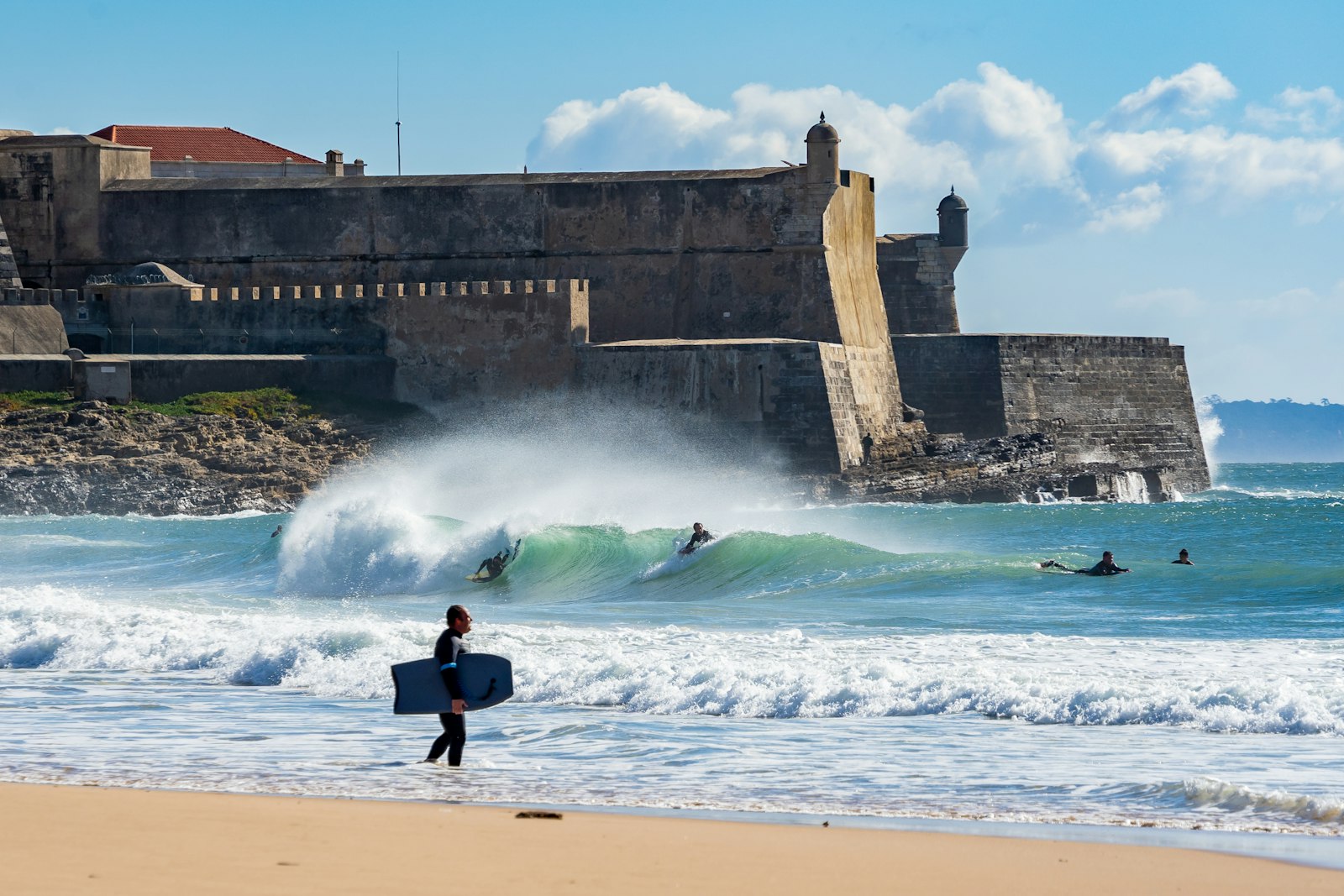
Nazaré. The name most people outside Portugal actually recognize, thanks to the giant waves — some of the biggest ever surfed anywhere on the planet break just off Praia do Norte. But Nazaré is far more than a surf-record headline: it’s a real fishing town with deep tradition, cliffside houses, a funicular up to the old Sítio neighborhood, and a working harbor where the boats still come in every day. It’s a bit busier and more tourist-facing than Ferrel or Foz do Arelho, but it’s worth the drive, if only to stand on the clifftop and watch the Atlantic do something genuinely intimidating.
These Silver Coast Portugal towns sit close enough together — usually a 15 to 30 minute drive apart — that you’re never choosing just one. You’re choosing a region, and shuffling between its parts depending on what a given day calls for: groceries and a hospital appointment in Caldas, an afternoon surf check in Peniche, a slow lunch in Óbidos.
What you don’t see in a cost-of-living spreadsheet
Every relocation article eventually turns into a table of average rent prices and grocery costs. We’ll get there too, because that data matters and you should never plan a move on vibes alone. But it’s also not what convinced us, and we’d be lying if we pretended otherwise.
What struck us, every single time we’ve been there, is how much life simply happens outside. The fish at the market is fresh because boats came in that morning, not because a supply chain made it look that way.
The light in the early evening does something we’ve never quite managed to describe properly. The surf culture isn’t a marketing angle, it’s just what the coastline does to a town when waves like that exist nearby. None of that shows up in a spreadsheet. All of it shows up in how it actually feels to be there. The parts that do fit in a spreadsheet — rent, schools, insurance, groceries — we broke down in our cost of living guide for a family of four.
Why this matters more now that we have kids
Before kids, “we like it here” might have been reason enough on its own. With two daughters, 9 and 3, the bar is different — and honestly, higher. A place needs to actually work: schools, healthcare, the ability to build a life and not just extend a long vacation.
Silver Coast Portugal’s larger towns, Caldas da Rainha especially, have real schools and real hospitals, not just emergency clinics built for tourist season. That matters enormously once you’re not visiting anymore, once you’re trying to live there. It’s also one of the open questions we haven’t fully answered yet, and we’ll be writing honestly about the school research as we go, rather than pretending we’ve already got it figured out.
What we do know already: the kids’ summer holidays give us roughly two months a year where we can actually live there for a real stretch, rather than just visit for a week. That’s likely where the next real test happens, well before any final decision gets made.
So why the Silver Coast, really?
Because Silver Coast Portugal isn’t a place we’re hoping will work out. It’s a place we already know, that already has a piece of our family history baked into it, and that — separately, almost by coincidence — also happens to be one of the more livable, less commodified, family-realistic parts of Portugal to actually build a life in.
We’re not in a rush, and we’re not pretending this is a sure thing yet. We’re looking at a horizon of around five years, not five months, and Silver Coast Portugal is where that five-year plan keeps pointing.
If you’re researching Silver Coast Portugal too — whether you’ve got a family house somewhere on this coast or you’re starting from zero — that’s exactly what this blog is for. We’ll get into the specifics over time: real costs, the school question, what a remote income actually needs to look like before any of this becomes real. For now, consider this the why behind everything else we’ll write.
If You’re Researching the Same Move
Everything else we’ve worked through so far, roughly in the order it comes up:
- Silver Coast vs. Algarve for families — how we compared the regions, and what we’d weigh differently now
- Cost of living for a family of four — our planning budget, line by line
- NIF and a Portuguese bank account — the first two pieces of paperwork, in the right order
- The D7 visa question — why EU citizens don’t need it, and what they actually need instead
- NHR and IFICI — what is left of Portugal’s tax regime for newcomers
And if you want to feel the Silver Coast for yourself rather than just read about it, the cheapest way in is a few nights on the ground. You can book a stay in one of these towns on Booking.com and see whether the place grabs you the way it grabbed us.
Want the next update?
We’re posting as we go — research, comparisons, what surprised us. If you don’t want to check back every time, join the newsletter below: no spam, just what we’re learning, when there’s something worth sharing.
Everything we worked out planning our own family move to the Silver Coast — the visa, the schools, the taxes, what it actually costs — is now one step-by-step guide, a workbook you fill in as you go, and a cost calculator built on real numbers.
See the Family Move Planner — from €12 →